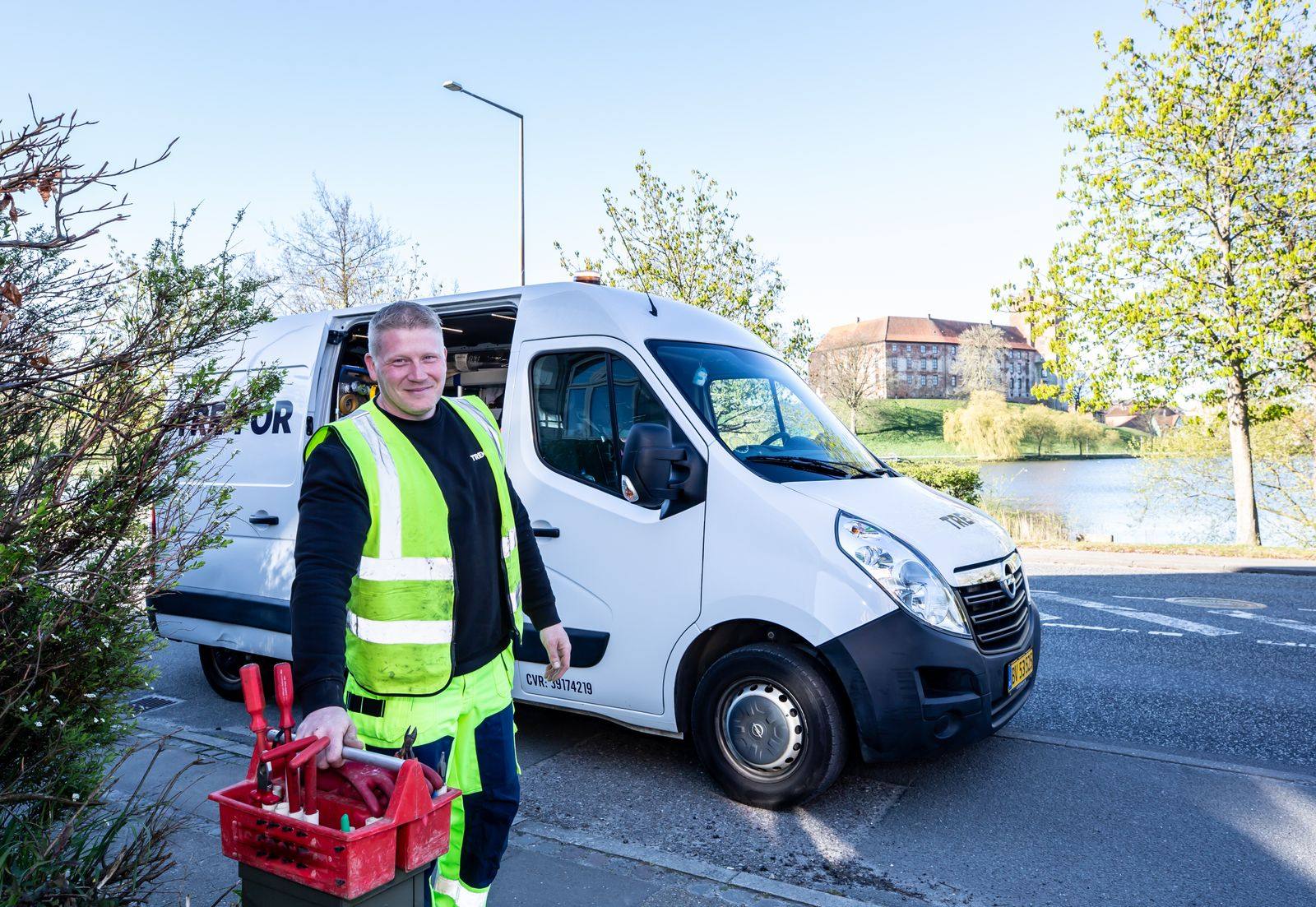
A tankless water heater does not store hot water at all. It waits for a faucet to open, senses the flow, fires a burner or energizes its elements, and heats water as it races through a compact heat exchanger. That on-demand design is efficient and space-saving, but it packs a lot of sensors and controls into one small cabinet, and every one of them has to agree before you get hot water. When one of them objects, the unit shuts down and posts an error code. In Jackson, MI, the usual culprits are mineral scale coating the heat exchanger, a flow sensor that no longer registers demand, an igniter or flame rod that cannot prove the flame, and venting or gas supply problems that trip the unit's safety limits.
Our approach to tankless repair is simple: measure first, replace second. When we arrive at your Jackson home, we record the active code and the unit's fault history, then work through the systems behind it. Flow sensors are checked with water running to confirm they report demand correctly. Flame rods and igniters are tested electrically. Gas pressure is read at the inlet with the burner at maximum, because a line that holds steady at idle can sag badly under full load. The vent and air intake are inspected end to end, and the heat exchanger is judged by the temperature rise it achieves at a known flow. Only then do we recommend a fix, and we can show you exactly why.
We work on tankless heaters from Rinnai, Navien, Noritz, Rheem, Takagi, and the other major brands, gas-fired and electric alike. The fix depends on the diagnosis: a full descaling flush through the isolation valves when scale is choking the heat exchanger, a new flow sensor when the unit no longer notices a faucet opening, a fresh igniter or cleaned flame rod when ignition keeps failing, or a vent correction when the unit trips on combustion air. Sometimes the answer is bigger. A gas line undersized for the unit's full firing rate has to be upsized, and a heat exchanger cracked by years of scale may make replacement the smarter call on an older unit. We lay out every option honestly before any money is spent. Call (517) 208-9296 to schedule tankless repair.
What homeowners call us about most is Water Heater Repair in Jackson. Start there if you're not sure what you need.
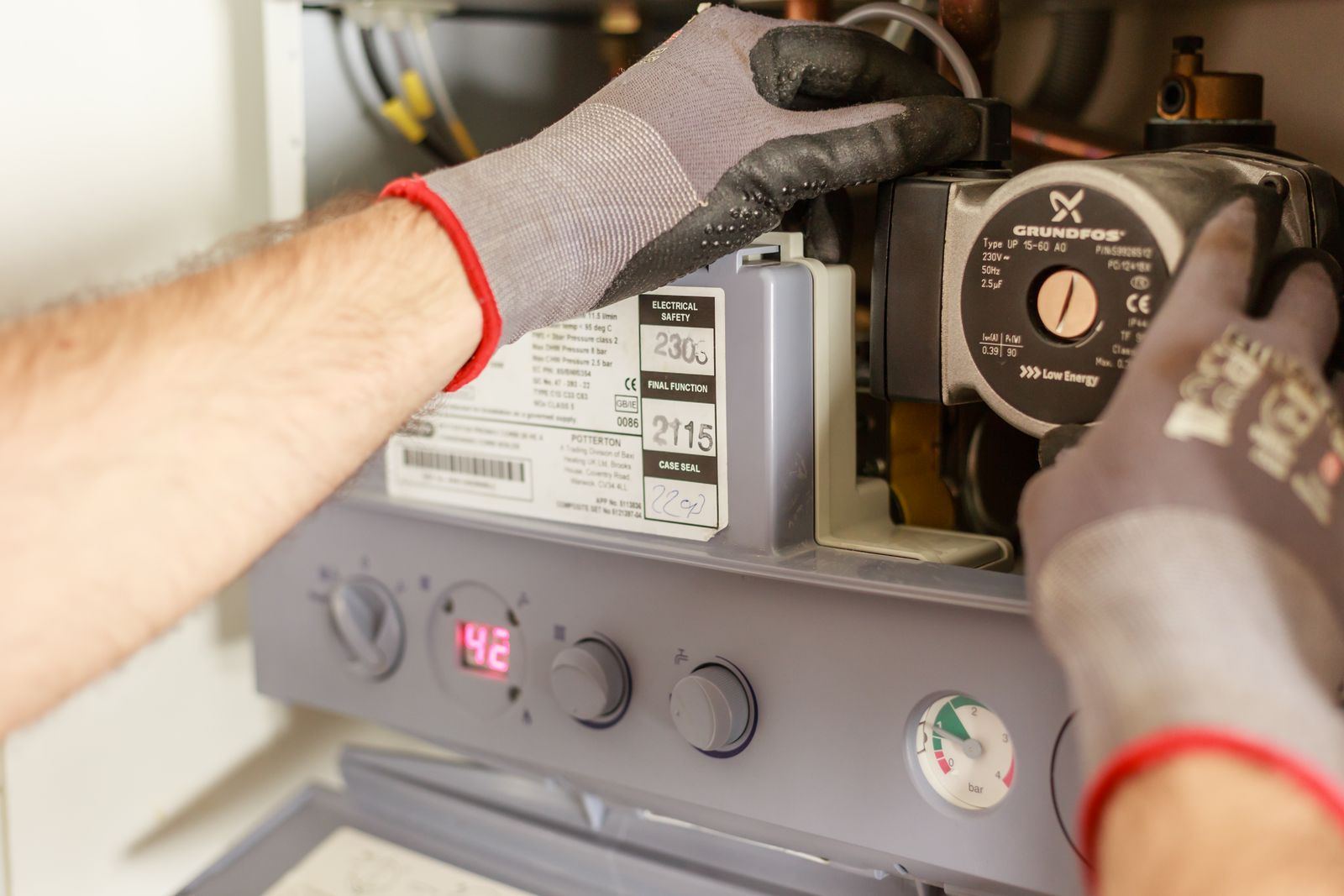
Signs You Need Tankless Water Heater Repair in Jackson
Most tanks announce trouble weeks or months ahead with rumbling noises, rusty water, or hot showers that keep getting shorter. Here are the most common indicators that it's time to call a professional:
- Moisture, rust, or drips appearing below the heater
- An error code flashing on the unit's display
- Small draws, like a bathroom sink, that never trigger the heater
- Outlet temperature that surges and sags while water is running
- Longer bursts of cold water between hot draws than you used to get
- A combustion fan that sounds louder or rougher than normal
- Hot water that cannot keep up with more than one fixture
- A clicking igniter with no flame, or a flame that lights and quickly drops out
Small Symptoms, Big Consequences
A little rust-colored water or a relief valve that drips now and then can be the first hint of a tank that is close to the end. Call Jackson Water Heater at (517) 208-9296 at the first sign of trouble.
Need Help With Tankless Water Heater Repair?
Call our team for pricing today.
Get Help: (517) 208-9296What Homeowners Ask Us Most
Why Professional Tankless Water Heater Repair Matters
Consider the risks first. A gas-fired tankless heater can burn nearly 200,000 BTU per hour at full fire, and its vent is the only thing carrying carbon monoxide out of the house; a joint that pulls loose or an intake that gets blocked changes that in a hurry. Electric tankless models are serious electrical loads, frequently more than 100 amps spread over several 240-volt circuits. Then there is the diagnostic puzzle. Error codes point to a system, not a part, so a flow sensor fault, a scaled heat exchanger, and a bad thermistor can look nearly identical on the display, and guessing gets expensive.
Professional service is usually the cheaper path, too. Our technicians do not guess at error codes. They test flow sensors with water moving, measure flame rod signal, confirm igniter resistance, read inlet gas pressure at full fire, and check the vent from end to end. When scale is the problem, we flush it out properly and rinse the system before the unit goes back in service. And because some tankless problems, like an undersized gas line or a cracked heat exchanger, are not solved by parts at all, we tell you so directly, before you commit to anything.
Step by Step: How a Visit Works
Our workflow is simple and thorough, so nothing gets missed between the fuel supply and the relief line. Here's how we handle tankless water heater repair from start to finish:
Diagnose the Error Code
Every visit starts at the control board. We read the current code and past faults, then confirm the diagnosis with a meter and a manometer on the flow sensor, ignition parts, gas supply, and vent.
Plain Findings & Firm Quote
We show you the failed part, explain the cause, and give you a firm price before work begins. If scale has cracked the heat exchanger or the unit is near the end of its life, we say so plainly.
Repair & Descaling
We carry the parts that fail most on tankless units, so flow sensors, igniters, flame rods, and thermistors are usually replaced on the spot, and a descaling flush takes about an hour.
Tested Under Load
Before we pack up, we open fixtures at low and high flow, measure the temperature rise, and make sure the burner and vent perform at maximum output.
Want a Professional Opinion?
Call Jackson Water Heater to talk through your situation with an experienced technician.
Call (517) 208-9296 NowWater Heater Care Tips From Our Technicians
A few preventive steps can help you avoid a cold shower or a wet floor down the road. Here's where to begin:
- Keep the unit powered during freezing weather so its freeze protection can work
- Do not keep resetting a recurring code; note it and have it checked
- Check the inlet filter screen periodically, since a clogged one starves the unit of flow
- If scale comes back quickly, add a softener or a scale-prevention cartridge on the cold inlet
- Have the gas line evaluated whenever you add a range, dryer, or fireplace
- Schedule a descaling flush every year; hard water may call for one every six months
- Keep the vent termination and air intake clear of leaves, nests, snow, and lint
Comparing DIY and Professional Work
The line between a safe DIY check and a risky repair is usually the moment you need to open a gas fitting, a vent connection, or an electrical cover. Consider the following comparison:
| Consideration | Doing It Yourself | Hiring a Pro |
|---|---|---|
| Diagnosis | Look up the code and replace a guess | Fault history and live readings pinpoint it |
| Descaling | Vinegar poured in without proper valves | Proper solution, pump, and flush time |
| Gas & Venting | No way to test pressure at full fire | Gas pressure and vent run verified |
| Electrical Work | Risk of shorting the control board | Wiring and connectors tested safely |
| Replacement Parts | Generic parts that may not fit the model | Right part, installed once |
| Result | Symptom patched, cause remains | Unit tested at low and high flow |
Talk to Our Tankless Water Heater Repair Team
The sooner you call, the sooner the hot water is back. Reach Jackson Water Heater for fast service.
Call (517) 208-9296 NowAreas We Serve for Tankless Water Heater Repair
Wherever you are in the area, the same experienced team shows up with the same parts and the same pricing. Find your community below.